

Between Sleeping Beauty’s Perfect Lines: The Heartbreaking Story of Eyvind Earle
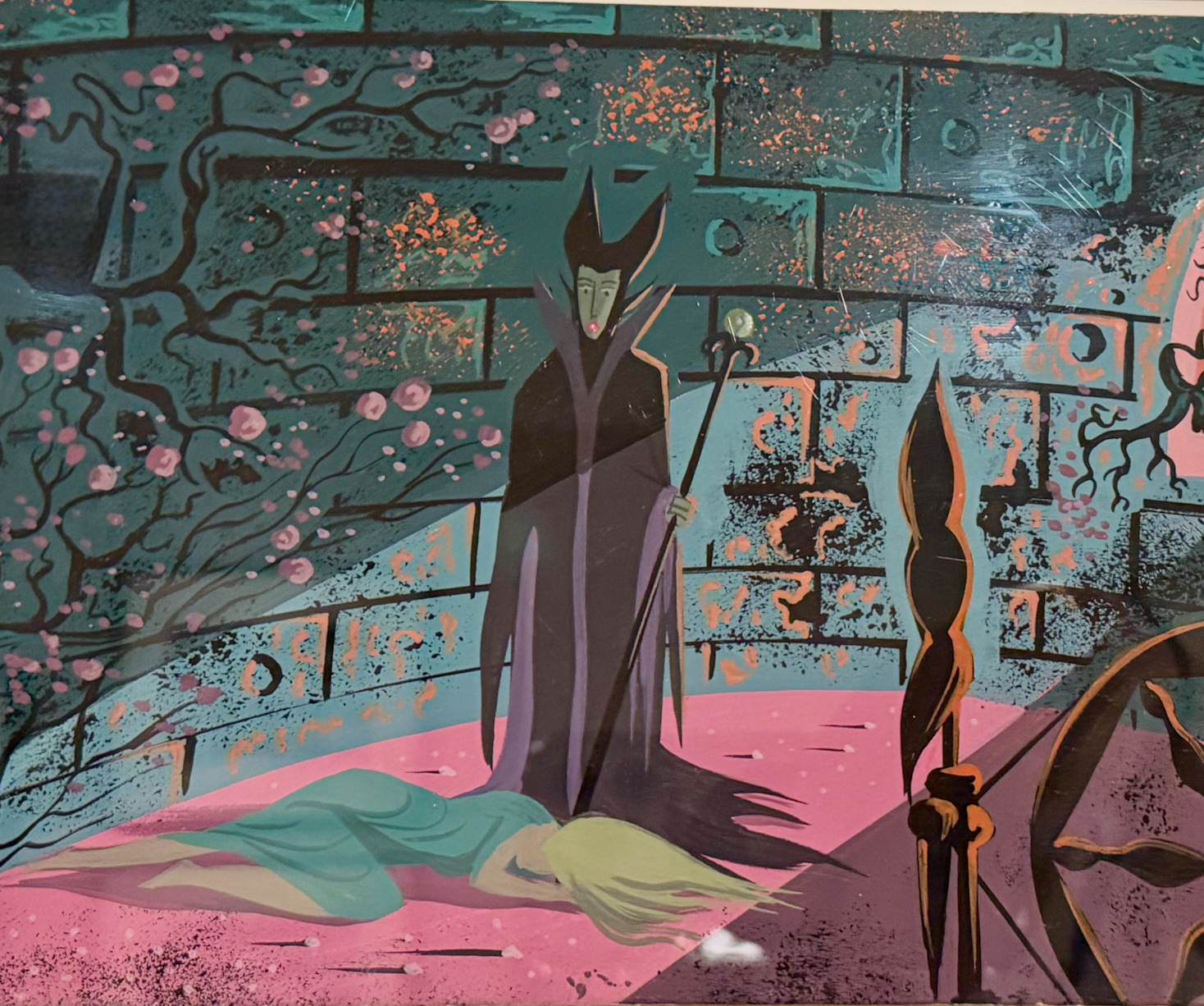
Eyvind Earle concept painting for Sleeping Beauty, courtesy of the Walt Disney Family Museum
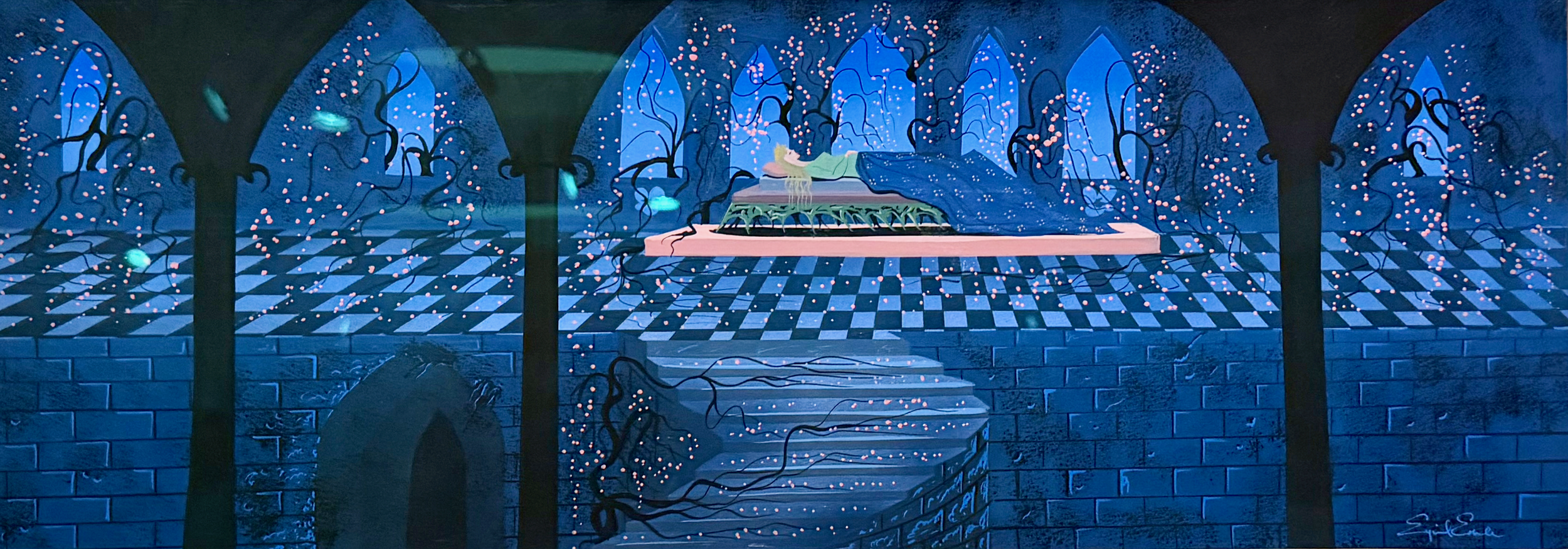
No other animated film has ever been quite as visually breathtaking as Disney’s Sleeping Beauty. Each tree is exquisitely crafted, every tiny detail accounted for in a “moving illustration” that seems almost impossible in its perfection.
But for years, I struggled to find the beauty in the man who created it.
Eyvind Earle was an extraordinary artist, but he was also an extraordinarily difficult person.
Reading interview after interview filled with Eyvind’s own words, alongside those of his colleagues, the uncomfortable truth jumped off the page at me, again and again, that he was not exactly the most beloved artist at Disney Studios.
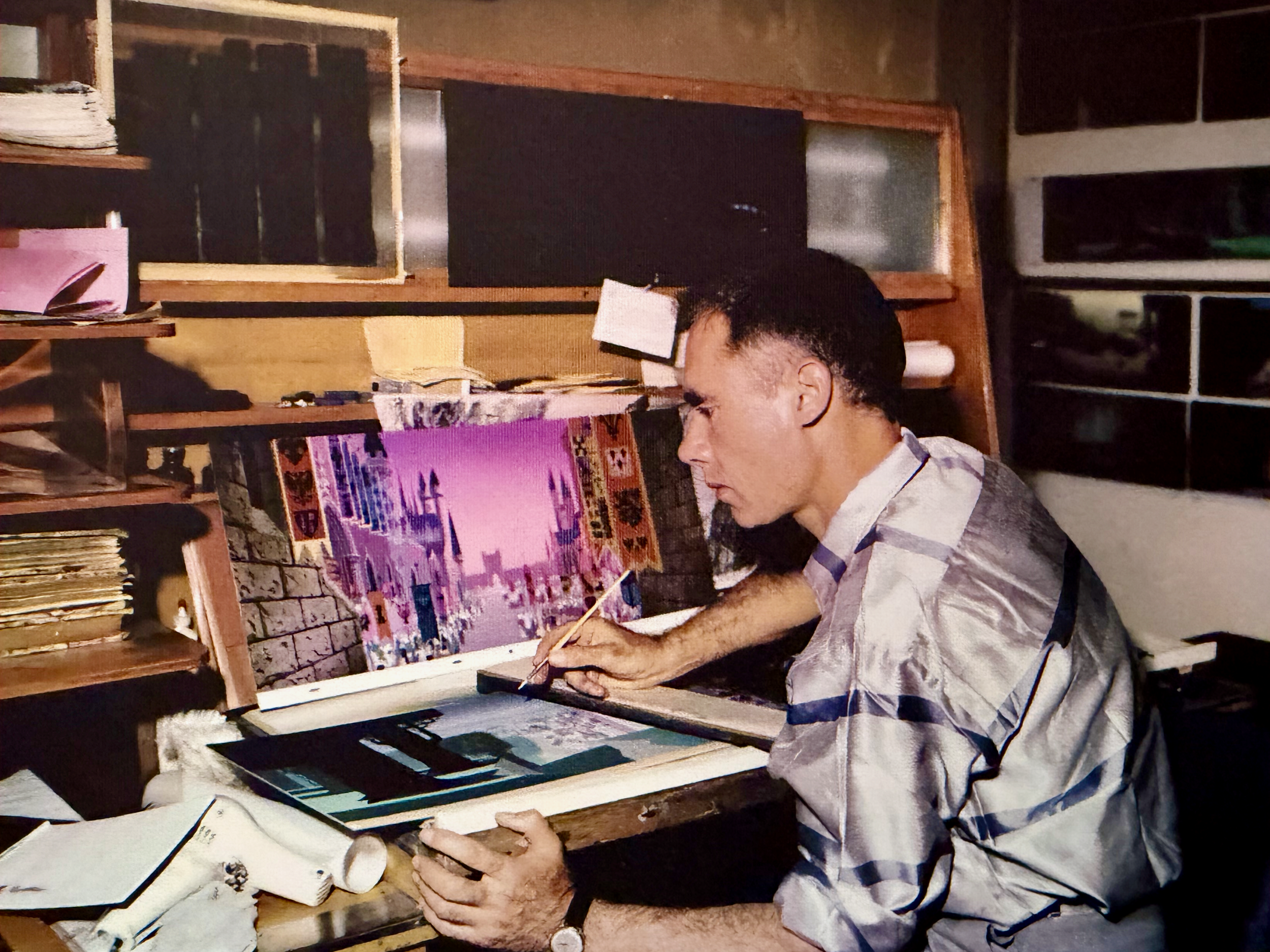
His ego was the first offender, the way he spoke about his work as superior to all others. Eyvind told anyone who would listen about how great an artist he was, any chance he could get. Regarding his first role at Disney Studios as an assistant background painter, he said he “Painted [the backgrounds] faster than Ray Huffine. Even Ray Huffine was aware, right away, that there was no comparison.” No one seemed spared from the artistic hierarchy in his head, making statements such as “[John] Hench is a far superior artist to Claude Coats.”
While he had respect for John, Mary Blair, and a small handful of others, most of his colleagues received less than favorable reviews. He called Joe Rinaldi and Ed Penner “nice guys, but talent-wise they were zeros,” and stated that Bruce Bushman, the father of Fantasyland, couldn’t draw at all, and his layouts were nothing.
When it came to Sleeping Beauty, Eyvind Earle spoke proudly about how Walt Disney wanted the film in his signature style. According to Eyvind, Walt said, “I’ve been trying to get Mary on film for years and never could. This time you’re going to get Eyvind Earle. And that was the end of that.” Eyvind painted furiously, always far ahead of the animators as he crafted intricate backgrounds inspired by illuminated manuscripts, medieval tapestries, and detail-focused artists like Jan van Eyck, Breughel. He said, “I was painting just as fast as I could—and everybody was praising them, and I love praise.”
Want to keep reading? The full subscriber-exclusive sneak peek into the next book in my Moments of Magic series is available to all my Substack subscribers!